“Find a spot in Winnipeg and find a negative story.” Those were my instructions. Easy. I’m heading down to a bus stop on Main St. where I’m likely to wind up writing a story about Winnipeg’s poverty issue.
Boy did my story take a turn.
I sat for one hour at a bus stop in silence. I wasn’t the only one. I’m not sure who was screaming louder the cigarette-butt strewn lawn of City Hall or the people at the bus stop. The sun was beaming – nature would’ve indicated it was a cheery, feel-good, spring-like day. But the overwhelming smell of feces in the bus stop was putting a damper on the mood. People were coming in and out of the shack with their Giant Tiger bags. One by one I looked at them. They looked at me. They stared towards the direction the buses would be coming from. My eyes wandered from the oncoming traffic to the guy sweeping the City Hall dirt from the sidewalk onto the dark grey snow and mucky lawn back to the people inside the shack. Fine. We didn’t know each other. Why would anyone say anything? That wasn’t the unusual part.
It was the mother and daughter sauntering off the bus hand in hand. The mother slightly ahead with the focused look on her face and the daughter a couple steps behind bobbing her curly brown hair behind as she cheerfully followed her mother. But not a word.
It was the pair of exhausted school girls waiting for their bus together. But not a word.
And nearly 40 minutes in to my experiment came the most unusual. At this point I wasn’t saying a word until I heard someone else utter a breath of language. A friend from school comes along. She waves and cracks a small smile. I smile and wave. She doesn’t come into the shack. Instead she stands directly in front of me, on the outside of my glass cage. Waiting. Five minutes later, her bus comes. But not a word.
I wasn’t upset or anything. I get it. Taking the bus is like down-time for most people – time to decompress and unravel their day. It’s almost bus etiquette not to talk. When one has their headphones in, another never suggests they take them out. When people shuffle onto the bus, everyone looks down in case they see someone they don’t want to talk to. Apparently same goes for standing and waiting for the bus.
The question is: was this a positive experience? Or a negative one? I can’t help but wonder if we’re living in a world that keeps us so connected, yet we’re all living in disconnect.
PS What broke the silence you ask? Three women chatting about which bus they were going to take. They got on seconds later. And the rest of us were back to standing in silence.
Tuesday, April 5, 2011

Monday, March 28, 2011
Never justice
I don't think I need to say much about this video -- it's pretty self-explanatory. But I will say this: it was arguably the most difficult story I've ever had to put together. It's Canada's looming issue with high rates of murdered and missing aboriginal women that made me want to tell this story, because ultimately, I think everyone should be paying attention to these campaigns. However, there's nothing that could've prepared me for the interview or the script writing process. Interviewing a mother whose daughter has been murdered was unbearable. The moment I walked into Barb Houle's tiny apartment decorated with photos of her deceased daughter, Cherisse, I felt such a deep sadness in the room. Knowing I could never understand how she felt or what to say to bring a moment of happiness to our first encounter was painfully frustrating. The script wasn't easier and it had to be written in 20 minutes. I didn't know where to start and I knew, and still feel, I could never get enough in or say it just right.
I would say that having to report on these kinds of stories is one of the most difficult tasks a journalist can face because one wants to show compassion, but also has to bring a neutral, business-like stance to the table under a very limited deadline. To compensate, all I ask is for you to view the story and pass along its message.
I would say that having to report on these kinds of stories is one of the most difficult tasks a journalist can face because one wants to show compassion, but also has to bring a neutral, business-like stance to the table under a very limited deadline. To compensate, all I ask is for you to view the story and pass along its message.
Tuesday, March 22, 2011
Some things never change
Some things never change and some things are better off left that way – like the Imperial Order Daughters of the Empire organization.
For over 100 years the women of the IODE have been giving back to their communities in an attempt to achieve “a better Canada.”
They were there when Margaret Polson Murray formed the organization as a way to support servicemen going to fight in South Africa. They were there to support troops during the Great War, the Second World War and along the way they helped those in their home country plagued by natural disaster or poverty. And they are still here today, for the military families still, but also for those requiring educational assistance, community services, and immigration adjustments. These women still haven’t lost their will to give…granted one change since 1900 is turnover – the turnover of members, unless you know someone out there who has been involved for over 110 years.
The IODE is a national organization with over 200 chapters across Canada. However, Winnipeg does have its own chapter – the Jon Sigurdsson Chapter (which is pronounced YO-ne Sig-eur-d-son). This is the only remaining chapter in Winnipeg; the other one folded last year said Ingrid Slobodian, President of the Sigurdsson Chapter. It consists of 56 members.
Slobodian has been helping the IODE for six years now. She is currently working on a luncheon coming up this Saturday – the Jon Sigurdsson Chapter IODE Spring Bridge and Whist Luncheon at the Betelstadur (1061 Sargent Ave.) from 11-4 p.m. March 26. All the profits are going to their scholarship series – each year the IODE hands out about 13 of them. (Visit this link to see if you qualify for any: http://www.iode.ca/SCHOLARSHIPS-AND-AWARDS-main.aspx.)
Slobodian points out one of the most rewarding aspects of working with the IODE: appreciation and curiosity.
“Kids always want to know who these old ladies are and what they’re doing,” she says.
“Usually I'm not a person to belong to things like this, but it is such a wonderful thing. They produce a lot of good among the people they help," said Lara Morris, member of the IODE for the past 13 years. Her 12 year certificate of involvement hangs on the wall next to her night table – she makes sure to point it out to us when a couple students visit her.
Morris plans to attend the luncheon but not to play cards – “I can only play solitaire,” she says. “It’s nice to be invited out to tea with the ladies and eat cookies,” says the 91-year-old Icelandic Amma.
For over 100 years the women of the IODE have been giving back to their communities in an attempt to achieve “a better Canada.”
They were there when Margaret Polson Murray formed the organization as a way to support servicemen going to fight in South Africa. They were there to support troops during the Great War, the Second World War and along the way they helped those in their home country plagued by natural disaster or poverty. And they are still here today, for the military families still, but also for those requiring educational assistance, community services, and immigration adjustments. These women still haven’t lost their will to give…granted one change since 1900 is turnover – the turnover of members, unless you know someone out there who has been involved for over 110 years.
The IODE is a national organization with over 200 chapters across Canada. However, Winnipeg does have its own chapter – the Jon Sigurdsson Chapter (which is pronounced YO-ne Sig-eur-d-son). This is the only remaining chapter in Winnipeg; the other one folded last year said Ingrid Slobodian, President of the Sigurdsson Chapter. It consists of 56 members.
Slobodian has been helping the IODE for six years now. She is currently working on a luncheon coming up this Saturday – the Jon Sigurdsson Chapter IODE Spring Bridge and Whist Luncheon at the Betelstadur (1061 Sargent Ave.) from 11-4 p.m. March 26. All the profits are going to their scholarship series – each year the IODE hands out about 13 of them. (Visit this link to see if you qualify for any: http://www.iode.ca/SCHOLARSHIPS-AND-AWARDS-main.aspx.)
Slobodian points out one of the most rewarding aspects of working with the IODE: appreciation and curiosity.
“Kids always want to know who these old ladies are and what they’re doing,” she says.
“Usually I'm not a person to belong to things like this, but it is such a wonderful thing. They produce a lot of good among the people they help," said Lara Morris, member of the IODE for the past 13 years. Her 12 year certificate of involvement hangs on the wall next to her night table – she makes sure to point it out to us when a couple students visit her.
Morris plans to attend the luncheon but not to play cards – “I can only play solitaire,” she says. “It’s nice to be invited out to tea with the ladies and eat cookies,” says the 91-year-old Icelandic Amma.
Monday, March 14, 2011
Who likes history!
“All I ever wanted to do is write a history book that people want to read,” said Jim Blanchard, author of Winnipeg’s Great War – a book that follows how the people of Winnipeg reacted and dealt with the First World War.
I can’t speak on behalf of everyone, but I wanted to read the book. I remember seeing it on display earlier this fall at McNally Robinson. I intended to go to the reading. But a pocket filled with nothing but lint and a hectic school schedule kept me from attending or purchasing the book sooner. So when I found out we’d be reading the book in our last semester of school, I was thrilled.
I’ve always been interested in history and I’m realizing the importance of knowing Canadian and local history. But I’m not a great at it.
My first question reading the book: why did the First World War start anyway? Rather than providing readers with a brief summary of what happened to trigger the war, Blanchard goes straight to the beginning of it, assuming his readers already know. While it’s not a critical thing to know, since the book primarily uses the war to discuss the happenings in Winnipeg, it was definitely a pertinent question as I continued to read on – possibly only because I felt silly for not knowing.
The assassination of Archduke Franz Ferdinand of Austria is said to have been the trigger that set off the war. An ultimatum between the Yugoslav nationalist that killed Ferdinand and the Kingdom of Serbia led to war. Eventually alliances formed and the major powers were at war too – major powers who had colonial ties to other countries as well.
Blanchard neglects to explain certain details to his audience at other times as well – such as why battles like the Somme, Ypres and Vimy Ridge began/entailed in the first place. Short explanations, I feel, would’ve gone a long way.
However, there is SO much information in this book. Blanchard does an incredible job sorting through what I can only imagine to be 1,000 of hours spent digging through archives to write this book. Not only does he use humorous and emotional stories from various newspapers at the time to highlight how it felt to live in Winnipeg from 1914-1918 (like how women used to pin white feathers on the men who hadn’t volunteered to go to war in 1915), but he also incorporates so many detailed facts that readers are automatically left needing to read the book again. These are his two biggest strengths. The stories maintain interest for those, otherwise, not always interested in historical facts. The facts ensure there’s always more to be learnt about the Winnipeg during the First World War.
This non-fiction book chronicles everything – from the role women played throughout to the way Winnipeggers treated immigrants to the educational system at the time to the role the media played to so much more, the release of Winnipeg’s Great War was anything but rushed.
So, did Blanchard achieve his goal? Will people want to read this history book? I think they should. I did.
But will people continue to want to read the book once they’ve started? I did, but I’ll admit it was a challenge. The amount of minute details including was at times difficult to follow – making the read sometimes overwhelming.
My advice: take it slow. Don’t rush the read. Relax if you find yourself overwhelmed and keep reading. You won’t take everything in on the first read, unlike other history texts like John Hersey’s Hiroshima which vividly tells the stories of several Hiroshima survivors. (Also keep in mind, Hersey was writing the story in that time period, Blanchard is writing about a period he never existed in.) But in the end everything will make sense – plus there’s a nice little summary recapping how exactly Winnipeg was impacted by the war. Then plan to revisit the book another time.
After all, Blanchard is writing about a story all Winnipeggers should know – our story.
I can’t speak on behalf of everyone, but I wanted to read the book. I remember seeing it on display earlier this fall at McNally Robinson. I intended to go to the reading. But a pocket filled with nothing but lint and a hectic school schedule kept me from attending or purchasing the book sooner. So when I found out we’d be reading the book in our last semester of school, I was thrilled.
I’ve always been interested in history and I’m realizing the importance of knowing Canadian and local history. But I’m not a great at it.
My first question reading the book: why did the First World War start anyway? Rather than providing readers with a brief summary of what happened to trigger the war, Blanchard goes straight to the beginning of it, assuming his readers already know. While it’s not a critical thing to know, since the book primarily uses the war to discuss the happenings in Winnipeg, it was definitely a pertinent question as I continued to read on – possibly only because I felt silly for not knowing.
The assassination of Archduke Franz Ferdinand of Austria is said to have been the trigger that set off the war. An ultimatum between the Yugoslav nationalist that killed Ferdinand and the Kingdom of Serbia led to war. Eventually alliances formed and the major powers were at war too – major powers who had colonial ties to other countries as well.
Blanchard neglects to explain certain details to his audience at other times as well – such as why battles like the Somme, Ypres and Vimy Ridge began/entailed in the first place. Short explanations, I feel, would’ve gone a long way.
However, there is SO much information in this book. Blanchard does an incredible job sorting through what I can only imagine to be 1,000 of hours spent digging through archives to write this book. Not only does he use humorous and emotional stories from various newspapers at the time to highlight how it felt to live in Winnipeg from 1914-1918 (like how women used to pin white feathers on the men who hadn’t volunteered to go to war in 1915), but he also incorporates so many detailed facts that readers are automatically left needing to read the book again. These are his two biggest strengths. The stories maintain interest for those, otherwise, not always interested in historical facts. The facts ensure there’s always more to be learnt about the Winnipeg during the First World War.
This non-fiction book chronicles everything – from the role women played throughout to the way Winnipeggers treated immigrants to the educational system at the time to the role the media played to so much more, the release of Winnipeg’s Great War was anything but rushed.
So, did Blanchard achieve his goal? Will people want to read this history book? I think they should. I did.
But will people continue to want to read the book once they’ve started? I did, but I’ll admit it was a challenge. The amount of minute details including was at times difficult to follow – making the read sometimes overwhelming.
My advice: take it slow. Don’t rush the read. Relax if you find yourself overwhelmed and keep reading. You won’t take everything in on the first read, unlike other history texts like John Hersey’s Hiroshima which vividly tells the stories of several Hiroshima survivors. (Also keep in mind, Hersey was writing the story in that time period, Blanchard is writing about a period he never existed in.) But in the end everything will make sense – plus there’s a nice little summary recapping how exactly Winnipeg was impacted by the war. Then plan to revisit the book another time.
After all, Blanchard is writing about a story all Winnipeggers should know – our story.
Monday, February 28, 2011
IPP Excitement
 Red River College's second-year Creative Communication students are so close! In just over a week we'll each be hitting the stage in the Presentation Theatre at the Convention Centre to present our babies. Almost literally.
The Independent Professional Projects are anything but neat -- at least during the process. My IPP was writing a book -- a book I've discussed in previous blogs. It's called Lockout: Exploring the rich history and uncertain future of Powerview-Pine Falls, Manitoba. The non-fiction story addresses the effects the paper mill closure has so far had on the town. It's a big deal because, as many locals know, the mill was the town's main employer. In the past ten years nearly 450 jobs have been lost in the town due to the declining newsprint industry. There are just over 1,000 people living in the community.
After 7 months of production -- three months of interviewing and research, two months of writing, and two months of rewriting, editing and printing -- I am thrilled to announce the story is almost here. Perhaps almost yours...for $20.
Upon sending the book to the printer, I'll admit -- I was terrified. Not only did I talk about other people's very emotional stories, but I talk about my own. Writing a book was an extremely vulnerable process. It still is. But as the IPPPs get closer and closer, I just want the world to see it!
It would mean a lot to me for people to attend my and my fellow classmates' presentations at the Convention Centre March 9-11. Presentations will run all day from 9:00 a.m. to 4:30 p.m. I present on the first day. Other great projects you can catch at the IPPPs include documentaries ranging from topics like cats to arranged marriages. There will be novels about the service industry to non-fiction accounts of some notable Canadian journalists' most memorable moments. If you're still not convinced, there will be movie blog presentations to horror films to charity events. All in all, the IPPPs shouldn't disappoint anyone.
If mornings aren't your thing, but you're still interested in learning more about my book and Pine Falls, I will also be having a reading at McNally Robinson in the Prairie Ink Restaurant, Thurs. March 10 at 8:00 p.m.
For more information about the reading, click here: http://www.mcnallyrobinson.com/event-10285/Yvonne-Raymond----Book-Launch/
For more information about my book/Pine Falls, click here: http://pinefallsbook.com/ (Note: the site is still in the making. More posts will be made once the book is out)
For more information about the IPPPs, click here: http://www.facebook.com/#!/event.php?eid=171261859586803
Monday, February 14, 2011
Think About It
It's something I was reminded of today. It's something I think is worth passing along -- mostly to journalists, but it can apply to everyone: What's the message you're trying to send with your story?
Think about it.
Think about it.
Monday, February 7, 2011
Assuming I'll have to move
 Number one: Be ready to work for free.
Number two: Be ready to move.
Those are the two tips I’ve remembered from journalists since I’ve wanted to be a journalist. I consider them cardinal rules. I consider them necessary steps in order to become a reporter. I have been preparing for both to happen since I began the Creative Communications program.
I’ve done a lot of work for free already. I don’t mind it. I love what I do and feel restless without journalism.
It’s number two that’s getting scarier and scarier as my graduation date approaches. It’s not because I am afraid of moving. I love the idea. Not knowing where you’re going to end up and under what circumstances is a total thrill for me. I crave that excitement. I crave that phone call that says: “We need you in Egypt tomorrow.” It’s my personality. I’m ambitious. I’m adventurous. I love feeling important. I want to make a difference.
But who gets left behind? Is it fair to leave the ones you love? For how long?
Leaving those who are important to me to the point they feel neglected is my fear. But then again, should fear stop anyone? No one said all fears play out.
Am I selfish?
Monday, January 31, 2011
It's almost done!
After six months of writing, my book about the uncertain future of Powerview-Pine Falls, Manitoba is in its final proofreading and production stage. It's off to the printer tomorrow! Stay tuned for more updates on where you can pick up a copy.
Tuesday, January 25, 2011
So you wanna be a TV reporter?
I just spent the last three weeks working as an intern at Shaw TV. The first week I shadowed reporters, picked their brains and sought out whatever advice I could wrap my brain around before week two. Week two and three immersed me into the Shaw TV newsroom. And by immersed I mean sucked me in, shook me up and spit me back out – a good thing of course. Here’s what I learnt by the end.
- Coming up with stories for TV isn’t a walk in the park. Bottom line: no visuals no story.
- Speaking of visuals, there’s a difference between still, abstract shots that sort of get the point across and moving, concrete shots that dictate what you’re going to say. You want to find a story with the latter.
- Getting the scoop on a good story requires you to get out, talk to people, meet people, observe your surroundings and question them. Ask yourself: was there anything unusual about what a person said? About what I saw? Follow-up, look into what you found out. Analyze everything!
- Shooting the story is where the pressure sets in and you only have one chance. First things first, when you arrive observe your surroundings. Talk to people, get the story, find out how everything is going to play out if it’s an event or photo-op. Tell your cameraperson what’s happening and what you need out of the shoot. Go in with an idea of what your story is and who you want to talk to, but be flexible, sometimes the best story unfolds while you’re there. Observe, analyze, observe, analyze, repeat, repeat, repeat. Craft your story while you’re there because your standup is coming and you don’t want to waste it.
- Doing a standup isn’t just your chance to show off on camera…not that I ever thought it was; I just never understood why reporters had to do them. Turns out they’re pretty useful – do a standup when you either need to show your viewers something or when you need to talk about something you can’t show with pictures, like statistical data.
- Sweating yet? Things aren’t going to slow down. Before you leave your shoot ask yourself: did my interviews cover the basics of the story? The who, what, when, where, why. Did my interview questions generate emotional responses? Do you know how your subject will be impacted by the news? How they feel about it? What they would like to see happen and why? Does your standup provide information? Can it be said in a voiceover? Probably? Reshoot it. Then brief your cameraperson on what your story is looking like so far – will they have enough shots to cover your angle? Is there anything specific you envision absolutely needing from them? Ask and get it. Okay, now you can go. …God, I’m sweating writing this.
- Writing the script should be easy by now because you know what you want to say. But double check a few things before you send your script to be vetted. Does the story begin with a memorable visual? As in, is it well shot? Will it grab the mom changing her baby’s diapers attention? Does it set up the rest of the story? Are you writing in and out of your clips? This one, I found tricky. It doesn’t mean summing up what everyone has to say about your news story before you go into a clip with them saying the same thing. It means providing viewers with small bits on information your viewer couldn’t look up on google while linking the last clip to the next one. Joanne Kelly gave me some good advice on how to do this when she told me to literally take the viewer on the journey I went on. Make them feel like they were right there alongside you uncovering the story. Telling a story isn’t just about providing the viewer with a piece of news and reiterating it over and over again in different ways for a minute and a half. Also, keep one thought to a sentence.
- Analyzing what you’ve done is hard and by the end you’re exhausted. A lot of the time I felt like I was crossing my fingers and hoping for the best by the end. I knew what I was supposed to have done, I just told you everything. But being able to read over your own work critically is difficult so I don’t know if I learnt a great approach to being able to do this other than asking myself all the things I just told you. But the best piece of advice I found myself taking into every shoot was from Kim Babij. She told me the reporter is getting access to information the viewers aren’t. This means, you’re the one asking the questions only your interview subject can answer. It means you’re the one pulling out all the details viewers won’t necessarily think of and providing those details in your story later. It means knowing more about the story than you can tell in a minute and a half. It’s the reporter’s job to collect this information and craft it in a way that’s descriptive, interesting, easy to follow and worth watching. Otherwise, she said, what’s the point of having a reporter?
- Screwing up is inevitable. Even the pro’s do it…or so I’m told. Swallow your pride, make the call and fix the mistake. Sending a shitty story to air will prove to be more embarrassing in the end. Having said that, don’t get cozy with screw ups, once you hit the big time you really will only have one shot and likely less time.
The good news is it’s really not that scary once you start to get the hang of it. By the end of my three week work placement I found myself feeling much more confident going out on shoots and writing scripts. While I’m still not an expert, the lightbulb is beginning to flicker.
Saturday, January 22, 2011
Things I've been noticing lately
1. Guys referring to their girlfriends as objects by calling them ‘my girl’ or ‘the girl’.
2. Hot 103’s Steve Adams has an incredibly well prepared show.
3. My ipod says it’s last week.
4. Pho No. 1 is the most underrated Vietnamese restaurant in the city.
5. I don’t think people really taste their food – as in I don’t think many explore the flavours they’re chewing.
6. There are way too many ‘new fiction’ and ‘new non-fiction’ books on the McNally Robinson bookshelves to go through.
7. An apple at 7-Eleven is almost $2.
8. This blog is an example of faulty parallelism.
9. After three weeks of driving to work, I miss taking the stinky city bus.
10. It’s cold outside.
2. Hot 103’s Steve Adams has an incredibly well prepared show.
3. My ipod says it’s last week.
4. Pho No. 1 is the most underrated Vietnamese restaurant in the city.
5. I don’t think people really taste their food – as in I don’t think many explore the flavours they’re chewing.
6. There are way too many ‘new fiction’ and ‘new non-fiction’ books on the McNally Robinson bookshelves to go through.
7. An apple at 7-Eleven is almost $2.
8. This blog is an example of faulty parallelism.
9. After three weeks of driving to work, I miss taking the stinky city bus.
10. It’s cold outside.
Monday, December 13, 2010
Profiling a champion
Follow this link (http://vimeo.com/17717287) to see a video Jeremie Wookey and I made for our broadcast journalism class. It's a profile on a young and accomplished highland dancer named Colleen McGregor. Enjoy!
Monday, November 29, 2010
Remarkable journalism: John Hersey's Hiroshima
 Hiroshima: the first city in the world to be destroyed by a nuclear bomb and a book by John Hersey. Unlike the city, the book was never destroyed. But both have only rebuilt themselves since the event – the city, literally and the book in numbers of copies.
Hiroshima is the largest Japanese city in the Chugoku region, the largest island of Japan. On August 6, 1945 the United States of America dropped an atomic bomb on the city. It killed 80,000 people almost instantly.
John Hersey was assigned to report on what happened. Rather than telling the story of crushed buildings, he told the stories of six lucky survivors’s crushed lives.
The intention was to print the 36,000 word article in four instalments in The New Yorker, but once the story was written no one wanted to break the piece up. It was kept a secret from New Yorker employees and on August 31, 1946, John Hersey’s Hiroshima filled the magazine.
The article was a hit. Harold Ross, editor of The New Yorker, said he’d never felt so satisfied with a publication after Hiroshima was printed. Copies sold out on newsstands and were being scalped for $15 to $20 – the magazine cost 15 cents. Apparently Albert Einstein even tried to order 1,000 copies – that never happened. And ABC radio dedicated four half-hour long programs to reading the story on-air.
The sensation was so huge, the article was eventually printed as a book and has been continuously reprinted since.
And for good reason – I think. The story is especially effective for two reasons: (1) Hersey’s dry, reportorial style of journalism lets the subjects’s stories write themselves. We don’t need his opinion. And (2) Hiroshima tells the stories of human beings, not buildings, not war politics. This allows readers to connect with the narratives. It’s an emotional ‘real person’ story. Everyone can relate to a struggle, therefore, everyone can read Hersey’s article and grasp, at least a portion of, the magnitude of the situation those six survivors went through – this instead of trying to relate to some political figure’s decision to drop the bomb.
I wonder, however, if pictures were missing from the book. On the one hand, they’d provide readers answers to their burning questions of what many scenarios and people looked like. What did these people look like? Hersey never really describes anyone. But on the other hand, the fact that Hersey focuses on presenting facts allows readers to imagine. The lack of pictures force readers to over-exaggerate the devastation, an effect that I think was intended and necessary, because adding pictures would mean filling in a part of the mystery for readers. Keeping this away from them makes them feel vulnerable when it comes to the possibilities of how things could’ve looked. This vulnerable feeling is essential if readers want to even begin to understand how these people might’ve felt.

At least that’s how I felt as I read the book.
Another thing that resonated with me is how Hersey never put himself into the story. He just presented other people’s information and facts surrounding the bombing. Hersey never had to try and make the story emotional because he let it be emotional. By this I mean, rather than trying to show readers where they should feel emotion, he just presented the information and let them decide the emotional parts – and there were many.
I think this is a technique that a journalist can try and mock as much as possible.
But at the same time, I question this idea because there are many other journalistic pieces where a journalist puts themselves in the story. For example the documentary film: Shake Hands with the Devil: The Journey of Roméo Dallaire. Dallaire, even though he’s not a journalist by profession plays the role of one throughout the 1994 Rwandan genocide to try and bring international attention to the issue in attempt to help stop it. While Dallaire told the stories of others, he also told his own. His story evoked a lot of emotion as well.
This leaves me to conclude that there isn’t necessarily a better way to tell a story. But I will say there is a more difficult way: that’s the Hersey way. He wasn’t in Hiroshima when the bomb dropped. He took no part in the story other than to be the one to tell it. The amount of research he likely had to go through pulling stories like that from people going through such an emotional and traumatic time is not only amazing – it’s reflective of his journalistic talent.
Also note: I chose to add a picture of two Hiroshima victims. What do you think about including them?
(Photos taken from: amazon.com; hiroshima.com; discoverhiroshima.com)
Tuesday, November 23, 2010
Long term journalism
Oi. It can be confusing.
Since March 2010, I've been working on a book about the town of Powerview-Pine Falls, Manitoba and the impact the paper mill's closure has had on the community. I began my research and interviews over the summer and came up with a carefully crafted outline in Sept./Oct. based on the information I received from that research and those interviews.
The results were mainly negative in the sense that many were concerned with how the town was going to continue.
However, as I return to the area for more interviews or follow-up interviews, I'm already beginning to notice a change in the way people talk about the area -- they're more positive about their situation and trying to reconstruct a base for a solid town with what they have. Or so it seems.
The confusing part is trying to represent both categories of feelings and knowing I'll likely be experiencing more of this attitude change as I continue. I'm so used to writing quick articles -- the interview happens, people have their opinion, I fire off the story. Done. Now it's all about updating my chapters to how people are feeling now, while still representing how they felt then too...which was only a few months away.
Dealing with the slight attitude changes is something I never expected and a challenge I'm facing.
Stay tuned to see how it all plays out.
Since March 2010, I've been working on a book about the town of Powerview-Pine Falls, Manitoba and the impact the paper mill's closure has had on the community. I began my research and interviews over the summer and came up with a carefully crafted outline in Sept./Oct. based on the information I received from that research and those interviews.
The results were mainly negative in the sense that many were concerned with how the town was going to continue.
However, as I return to the area for more interviews or follow-up interviews, I'm already beginning to notice a change in the way people talk about the area -- they're more positive about their situation and trying to reconstruct a base for a solid town with what they have. Or so it seems.
The confusing part is trying to represent both categories of feelings and knowing I'll likely be experiencing more of this attitude change as I continue. I'm so used to writing quick articles -- the interview happens, people have their opinion, I fire off the story. Done. Now it's all about updating my chapters to how people are feeling now, while still representing how they felt then too...which was only a few months away.
Dealing with the slight attitude changes is something I never expected and a challenge I'm facing.
Stay tuned to see how it all plays out.
Monday, November 15, 2010
Sharing my student wisdom with those who can stand it
I’m the arts editor for the Projector.
With the job comes several challenges. Three repeatedly come to mind, actually.
- Knowing I’m not an expert editor, but having to act confident about my decisions.
- Acknowledging and accepting the fact that there are bigger, more popular news sources than mine – this means my story lists must be extra unique to draw attention.
- Being in charge of the arts sections often means a lot of event coverage – because we print every two weeks the news gets old fast, so it’s a challenge to try and encourage writers to find a broader way to cover an event… sometimes even I’m not sure.
This week I’m working on hiring arts editor interns. They'll run the Projector while second-year CreComms are on workplacement. The task is both exciting, because I get to play a part in scouting new talent, and overwhelming, because who am I to say who's the best? I’m also reminded that I was in their shoes last year – how much could I have possibly learned since then?
A lot actually.
This position made everything my instructors had been telling me over the past year make sense. I realized writing needed to be clear before it could be creative. I also realized no writer is perfect. Something can always be fixed. Editing is like solving a puzzle – the edges are easy, it’s completing the inside that’s tough, and that's when many people give up.
A few things I’ve learnt since working for the Projector is:
- That assuming proper nouns are spelt correctly, no matter how good the writer is, is a bad idea
- That leads and context couldn’t be more essential to a story – a writer who can do both is talented
- That formatting is an annoying thing to have to fix, but an easy thing to fix
- That no matter how hard you try to make submission instructions clear, there’s always going to be someone who gets it wrong – you just have to deal with it
- That the best stories are the hardest to edit but you have to stick with them because there’s going to be something to fix
- That it's always important to double check facts
- That it's important to understand one can never stop editing, but one needs to – it’s important to keep the original story
- That headline writing is so not my thing
When editing, I try and give students feedback as much as possible because I know I always appreciate it when people do it for me. But, while I hope they consider my advice when I'm offering it, I also hope they take it with a grain of salt – it was only a year ago I was in their shoes.
Acting confident is something I continuously work on, so I don’t have a solution for that yet. However, I think I can pull it off in front of student writers; I just have to put up with my brain’s internal arguments later.
The latter two challenges I feel are self-explanatory. Every paper, big or small, deals with competition. Every paper tries to be unique. The only thing that makes me think the Projector has particular challenges is the fact that we have a small distribution and students within the program often say it’s weak.
This is what drives me to try and be extra creative with my story lists...which leads me to my next point: you can only try so hard and then it’s up to someone else.
I hate assigning event coverage stories. I try not to. Either I’ll try and guide the assigned writer into a direction that uses an event to drive a larger story or I’ll say what the larger story could be.
It's not always successful in the end, but I have to trust the writer did their best. The writers also have to trust that I do my best, but my best still isn't perfect. Although I might've learnt the above list of things doesn't mean I'm great at it. Those writing for me and I are all students.
And at the end of the day, all we can do is fake it ‘til we make it.
Monday, November 8, 2010
I raise my hand
Why do academics write out their secondary sources in their essays but journalists don't?


Monday, November 1, 2010
Twitter: The industrial revolution of journalism
 You’re probably sick of hearing about it, but here I go anyway.
Many people think social media, especially Twitter, is becoming one of the new faces of journalism. While I agree it is shaping the way we approach our news, I ask: Who really wants it to be like this?
My evidence suggests no one really, so who’s pushing so hard to make it happen?
Last weekend, the two most interesting stories in two major newspapers were lengthy investigative pieces. The Globe and Mail reported on Canada’s role in peacekeeping and the Winnipeg Free Press broke a story on the effects of no running water in Manitoba reserves. I mustn’t be the only one taking interest in these types of stories because they both made the front page.
In addition, while filming an entertainment profile for school, I got into a discussion with one of the interviewees who was saying she hates how TV news stories have been cut down so much and how there are fewer and fewer feature stories and documentaries. Those are the one’s she’s interested in, she said. Sure, it’s tough, funding for these types of projects is tricky due to the magnitude of the expense. But isn’t it worth it? If journalists only ever report on what happened that day, whether it is in their papers or via Twitter, then aren’t we only ever keeping records of events. How can we change things if we don’t look into the roots of the issues?
One of the reasons why I wanted to become a journalist was to do so. Oftentimes, I feel like that’s discouraged nowadays.
Why are journalists always trying to move quicker and quicker to get the stories done faster and faster? How much faster can we work until quality is absent and quantity becomes everything…or are we already there?
Monday, October 25, 2010
Why report on crimes?
 I sat in the preliminary hearing of a murder trial today. Cool huh?
That’s what I thought at first as I sat there with my big fancy reporting pen and notepad. I felt important. I thought I might like to pursue crime reporting. And I was especially proud because I felt like a real journalist reporting on the stuff that matters.
And then I doubted myself: Does crime reporting matter?
It’s not like reporting on horrific acts like the murder trial I was in today is going to stop crimes from happening. And the details must just re-traumatize victims – I don’t want to do that.
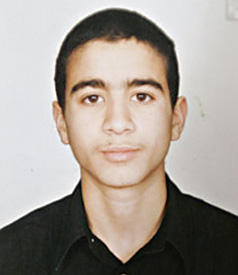 But then again reporting on issues of crime could help keep the justice system in line. Think about Omar Khadr’s case: without the media’s constant attention to the issue, would we still know about him? Would the Canadian government still be trying (or pretending to be trying) to do something for the poor boy if it weren’t for the public outcries reported by media?
 Usually, when I’m asked to explain why crime reporting might be necessary I just regurgitate one of my first year sociology class lessons. According to one of the best instructors I ever had, Helmut-Harry Loewen, society needs crime in order to function. Crime brings society together because those who hear of criminals on the loose look out for each other and start public awareness groups like MADD which in turn brings people together to help fight the acts. It gives us another reason to speak to each other and look out for one another. The repercussions from criminal acts also highlight the good and the bad people – by doing this we create ideals; we show what it takes to be accepted.
At least that’s the basis of Loewen’s point.
However, this explanation really only explains how crime reporting participates in the function of society. Is that really enough? In response I’ll choose to revert back to my initial question: why should we report on crime?
Mike McIntyre? Are you out there?
Monday, October 18, 2010
There's a time and a place for political protest

I think it’s repulsive.
Sunday’s University of Winnipeg graduation ceremony awarded Manitoba’s senior minister Vic Toews with an honorary degree, but many students in the audience and the ceremony's valedictorian, Erin Larson, didn’t agree with the offering. Fine. But take your political protests and keep them outside the ceremonies like the other polite protesters – don’t publicly humiliate someone for something they had no control over receiving.
The Winnipeg Free Press reported that during Larson’s speech, Toews sat only a few feet away from Larson keeping his eyes glued to his program and leaving through a side door “immediately” after the ceremony.
How sad.
Just because Toews doesn’t believe in the same things Larson does, doesn’t mean he should be humiliated in front of thousands of people, including his mother. He’s still human.
Larson argued Toews doesn’t support the U of W’s beliefs, but I thought universities existed to explore different belief systems and to learn how to tolerate other people who don’t necessarily believe in the same things as you. Not to mention Mary Agnes Welch’s article explains the decision to grant Toews an honorary degree was decided by faculty members and students, so clearly Toews is supporting several people from the U of W’s beliefs.
I’m not saying Larson didn’t have the right to disagree with Toews’ award; I’m saying she should have kept her protests outside the ceremony. Not only were Larson’s actions disrespectful they were immature.
(Photo from the Winnipeg Free Press)
Monday, October 11, 2010
Defining Thanksgiving through headlines
Interested to see how many ways Thanksgiving could count as a news story, I set out to compile a list of headlines written this weekend about the turkey gobbling festivity. What I didn’t expect to find is how each headline seems to define the holiday in some way or another too.
To accompany your leftovers, I present to you my list:
“A Canadian Thanksgiving” – eCanadaNow
“Stores open and closed on Thanksgiving Monday in Canada” – Business Review Canada
“Thanksgiving Surprise – A dog who raises money as an official volunteer with BC SPCA” – The Vancouver Sun
“Guide to opening, closing for Thanksgiving weekend” – Winnipeg Free Press
“Helping harvest a bountiful Thanksgiving” – Winnipeg Free Press
“Thanksgiving – as Canadian as pirates” – Winnipeg Free Press
“A Thanksgiving travesty” – Winnipeg Sun
“10 ways to add meaning to Thanksgiving” – Winnipeg Sun
“A sumptuous pork roast for Thanksgiving” – The Globe and Mail
“Siloam Mission expecting hundreds to enjoy their traditional Thanksgiving feast” – CTV News Winnipeg
“Volunteers help spread Thanksgiving cheer” – CTV News Toronto
“Students brings Thanksgiving to less fortunate” – CTV News Edmonton
“A Thanksgiving feast for vegetarians” – Canada AM
“Record breaking Thanksgiving” – CTV News
“Missions offer Thanksgiving for homeless” – CBC News Winnipeg
“Green Thanksgiving gains ground” – CBC News
To accompany your leftovers, I present to you my list:
“A Canadian Thanksgiving” – eCanadaNow
“Stores open and closed on Thanksgiving Monday in Canada” – Business Review Canada
“Thanksgiving Surprise – A dog who raises money as an official volunteer with BC SPCA” – The Vancouver Sun
“Guide to opening, closing for Thanksgiving weekend” – Winnipeg Free Press
“Helping harvest a bountiful Thanksgiving” – Winnipeg Free Press
“Thanksgiving – as Canadian as pirates” – Winnipeg Free Press
“A Thanksgiving travesty” – Winnipeg Sun
“10 ways to add meaning to Thanksgiving” – Winnipeg Sun
“A sumptuous pork roast for Thanksgiving” – The Globe and Mail
“Siloam Mission expecting hundreds to enjoy their traditional Thanksgiving feast” – CTV News Winnipeg
“Volunteers help spread Thanksgiving cheer” – CTV News Toronto
“Students brings Thanksgiving to less fortunate” – CTV News Edmonton
“A Thanksgiving feast for vegetarians” – Canada AM
“Record breaking Thanksgiving” – CTV News
“Missions offer Thanksgiving for homeless” – CBC News Winnipeg
“Green Thanksgiving gains ground” – CBC News
Monday, October 4, 2010
The Globe Gets a Makeover
 “If you don’t push yourself, if you don’t dare to make today better than yesterday; if you don’t believe in progress, you’re doomed to defeat.”
That’s the motive behind the Globe and Mail’s redesign – to attempt to reinvent the future rather than long for the old days, explained John Stackhouse editor-in-chief for the Globe and Mail.
Last Friday, the Globe launched “the most significant redesign in The Globe’s history.” It has colour on every page, some pages are printed on glossy paper, the size of the paper is narrower (which is a huge bonus for those who ride the bus to work or school everyday), the website is easier to navigate and it’ll be featuring more in-depth stories that explore the power and insight of ideas.
But the million dollar question is: Is the redesign effective and will it help save the future of the Globe’s print edition?
I think the layout portion of the redesign is effective in the sense that its use of colour helps draw readers in and because their switch in paper makes for much clearer pictures. Many readers have become lazy. They want to see pictures to peak their interest before committing to the story – so the crisper the better. And need I mention the smaller size again?
However, I question how much easier their new web design really is? I don’t think I’d have noticed the change had I not read the article in Friday’s paper. http://www.theglobeandmail.com/
As to whether or not the redesign will help save the Globe’s future as a newspaper (because despite the fact that Stackhouse outlines all the ways The Globe is growing in readership, he seems to suggest saving their future is what they’re getting at when he says they’re not interested in prolonging the past but rather inventing the future) I think they’ve nailed my biggest concern for reasons why newspapers could flop – they’re trying to be what they used to be: about breaking news. The fact that the Globe recognizes print needs to be more in-depth makes them that much more competitive than other daily’s – in my opinion at least.
Overall, it’s nice to see the Globe realizes two things: (1) That print journalism should be investing in in-depth stories, because that’s where its future is heading – we have other outlets now for breaking news. (2) Hallelujah! The damn paper ain’t so clunky! Finally, a paper that realizes how many Canadians ride a bus or subway to work (excluding old fashioned, gas guzzling Winnipeg of course) and hate having to close up their paper just because someone sits next to them.
I give only checkmarks to John Stackhouse and the Globe team for realizing it’s time for a bit of tweaking.
To see what else the Globe and Mail did with their redesign, check out John Stackhouse's article: http://www.theglobeandmail.com/community/digital-lab/a-new-globe-in-print-and-online/article1735935/?cmpid=rss1
Subscribe to:
Posts (Atom)